

55A Morton Road, N1 3BG, London, United Kingdom
See what we’re up to on social.
Fresh tips, ideas and strategies for growing your business.


What is Google Business Profile, and How Does It Impact Organic SEO?
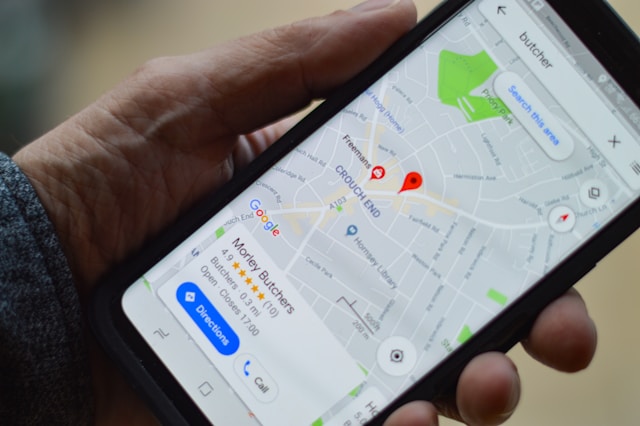
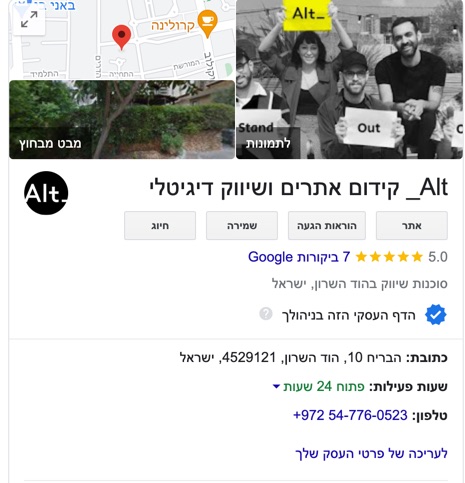
Google Business Profile is Google's free service that enables businesses to showcase themselves prominently in search results and on Google Maps. The profile includes essential information such as business name, opening hours, address, telephone number, website link, questions and answers, and most importantly, customer reviews and ratings.
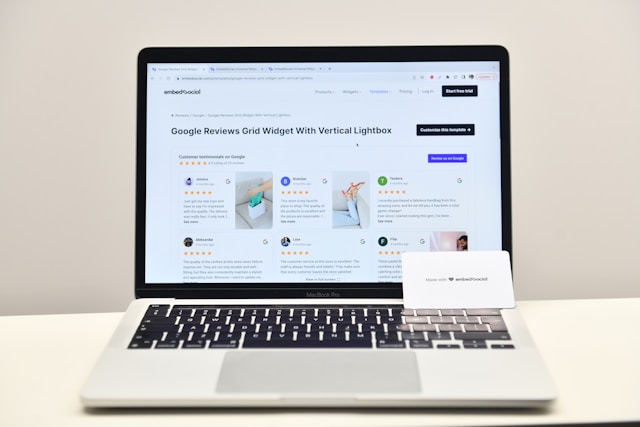
How Google Business Profile affects organic visibility
When someone searches for a service or product related to your business, Google aims to display results that are both relevant and local. This is where Google Business Profile comes into play; it's one of the primary factors in local search rankings, with the reviews element playing a crucial role. In fact, customer reviews are more than social feedback; they're an integral part of how Google ranks businesses, particularly in local searches. They strengthen credibility, boost engagement, and help send signals that Google's algorithm can recognise and analyse.
Here's how it works:
- Map Pack positioning - Businesses with well-maintained, current profiles that have positive reviews tend to appear in the prominent local three-pack above regular search results.
- Fresh content that Google favours - Every review written on your profile is considered by Google as new, authentic content. This helps "revitalise" the profile and improve the likelihood of it being displayed.
- Trust and authority - A business with numerous reviews, particularly positive ones, is perceived by Google as more authoritative and trustworthy, directly affecting its ranking position.
- Indirect impact through CTR - A profile with high ratings and a substantial number of reviews attracts more clicks, which Google takes into account as part of its organic ranking considerations.
Despite not being a website in itself, Google Business Profile is a critical component of organic SEO, especially for businesses operating within a specific geographical area. Smart management of the profile, including reviews, photos, and regular updates, can transform organic traffic into actual customers.
How Positive Reviews Boost Your Google Rankings
Many businesses strive to accumulate as many positive reviews as possible, but not all understand their true value for organic SEO. Beyond improving your business's image in the eyes of potential customers, reviews form part of Google's algorithm, and those who leverage this correctly enjoy higher visibility in search results.
Review = Recommendation. Recommendation = Ranking
For most users, a positive review is perceived as a personal recommendation, directly influencing purchasing decisions. From Google's perspective, it's a signal indicating relevance, credibility, and authority. The more people recommend your business, the more the system understands that your business fulfils a genuine need.
From a psychological standpoint, when people see a business with numerous positive reviews, they feel more confident. This same effect transfers to Google's algorithm, which calculates the impact of reviews on overall rankings, particularly in location-based results and Google Business Profile listings.
Why quantity alone isn't enough: The importance of frequency and quality
Simply accumulating reviews isn't sufficient; you need to maintain momentum. Google recognises whether reviews are recent or dated, and if there's a long gap between reviews, this could be interpreted as declining activity or relevance.
Additionally:
- Reviews containing detailed descriptions contribute to user-generated content (UGC) - Google considers these as quality material
- A variety of opinions, even if not all are 5-star ratings, creates a more authentic impression and prevents suspicion of manipulation
- Language analysis - Google "reads" the content and identifies whether it relates to your service area, geographical region, and more
Natural keyword integration in reviews - without requesting, but with guidance
Google doesn't just consider star ratings; it also analyses the words customers write. When a customer mentions the service they received, for example, "excellent locksmith service in Manchester," this presents an opportunity to strengthen the connection between that phrase and your business.
Of course, you mustn't ask customers to write keywords artificially, but you can guide them subtly:
- Send a follow-up with an open-ended question such as: "We'd appreciate if you could share how our service helped you."
- Ask them to describe the service they received or what made them choose your business
- Include fields in feedback forms that invite elaboration (for example: "What did you particularly value about our service?")
Negative Reviews? Don't Panic - Leverage Them
A negative review might initially appear as a crack in your reputation, but in practice, it can become a powerful tool. Businesses that respond correctly know how to transform an unpleasant moment into a public opportunity to demonstrate credibility, accountability, and excellent customer service, exactly what Google (and users) love to see.
Why negative reviews are also opportunities
Firstly, nobody expects a business to have 100% perfect reviews. A profile that includes one or two negative reviews actually appears more genuine and trustworthy. But here's where the crucial difference lies: how you respond.
A proper response to a complaint is an opportunity to:
- Demonstrate there's a human response on the other side
- Explain what's being done to resolve the issue
- Project professionalism, accountability, and willingness to make things right
The observers, who are no less important than the reviewers themselves, judge you based on your response, not on the review itself.
Proper response = Higher score
From Google's perspective, responding to reviews indicates the business's level of engagement. Beyond that, it directly affects how users perceive you. Here are principles for effective responses:
- Quickly: Respond within a few days - this demonstrates care
- Calmly: Don't argue or deny - even if you disagree with the review
- Responsibly: Acknowledge the negative experience, even if you're not at fault. For example: "We're sorry to hear that your service experience didn't meet your expectations..."
- Offer solutions: Suggest follow-up care, explanation, or a way to make amends, however small
Remember: users don't expect perfection; they expect you to stand behind your service.
How to turn a negative review into a strengthening post
Proper phrasing can transform a negative experience into a subtle marketing tool. Here's an example:
⭐ 1/5: "I waited an hour and received no response."
Response: "Thank you for taking the time to write to us. Our service operates 24/7, and we're sorry to hear this happened. We've reached out to you privately and will examine how we can compensate you. In urgent cases, we always recommend calling our helpline directly. We're here for you."
Instead of excuses, take responsibility, provide relevant information, and invite continued contact. For anyone observing from the sidelines, this serves as evidence that this is a business that listens and takes action.

Tips for Review Management That Lead to Higher Rankings
Even if you've accumulated dozens of excellent reviews, the work doesn't end there. Proper review management is an ongoing process that requires attention, but not necessarily a great deal of time. When done correctly, you'll see results in rankings, visibility, and user behaviour.
Consistency and availability: Even once a week counts
There's no need to monitor Google Business Profile daily, but it is important to establish a clear routine. For example:
- Regular weekly check of new reviews
- Respond to every review, even briefly - this demonstrates engagement
- Flag problematic reviews for follow-up (for instance, if investigation or internal response is required)
If you have a CRM system or customer management tool, direct integration with Google reviews can save time and enable documented tracking.
Integrating reviews into your website: Both promotion and trust
Reviews don't have to remain solely on Google; they can support your website's SEO efforts. How do you do this?
- Embed a review feed on your website - using tools like Trustpilot, Reviews.io, or Google plugins
- Add relevant reviews to service or product pages - this strengthens authority and credibility
- Use Review Schema Markup - structured code that signals to search engines that your site contains reviews. This can lead to star ratings appearing in Google search results (rich results)
Important: Don't fabricate reviews on your website. If they're not verified or don't appear authentic, this can harm rather than help.
Ongoing monitoring and feedback loop control
Beyond point responses, it's worth treating reviews as a strategic tool:
- Look for recurring patterns - What do customers repeatedly mention? What do they love? What bothers them?
- Conduct periodic analysis - for example, quarterly: Which services received praise, and where were there more complaints?
- Connect insights to business initiatives - Changes in service delivery, website content updates, or even improvements to your booking interface
A business that listens also progresses. When Google sees that you're improving through dialogue with customers, this is a significant advantage in organic promotion.
Managing Your Google Business Profile - The Foundation for Visibility and Reviews
To have reviews on our profile, we need to ensure there's a proper place for them to appear. A Google Business Profile isn't just a digital identity card; it's an engine in its own right that affects your business's visibility on maps, in search results, and in interactions with potential customers.
Proper profile management directly influences both the quantity and quality of reviews you'll receive, as well as your rankings.
Complete and accurate business information
Google prioritises businesses with complete, accurate, and current profiles. Beyond this, it helps customers understand that you're an active and reliable business. Here's what's particularly important:
- Opening hours - Be sure to update for seasons, holidays, or temporary changes
- Active telephone with human or voice response - This affects user experience and rankings
- Primary and secondary categories - Accurate selection helps Google match you to relevant searches
- Photos - A business with current photos attracts more interactions
- Links - To your website, online booking, or WhatsApp (if relevant)
Don't leave fields empty, Google may favour businesses that have provided more details, even if their reviews are fewer in number.
How to encourage more reviews from satisfied customers
For customers to leave reviews, you need to ask them. But there's an art to this as well. Here are some simple and effective tips:
- Send a direct review link - Every business profile includes a unique URL for writing reviews. Send it via WhatsApp, email, or even SMS
- Timing is everything - The request should come immediately after service completion, whilst the experience is still fresh
- Integrate the request as part of your process - For example, in service summary messages, invoices, or reminders to returning customers
- Provide value or recognition - Not rewards (which violate Google's policies), but a personal message: "Your review helps us tremendously in reaching more quality customers like yourself."
And naturally, maintain consistency in tone and language, and be careful not to pressure the customer. An authentic review is worth far more than one written under duress.
Reviews Aren't a Bonus - They're an Engine
Among all the tools that organic SEO offers (content, link building, technical optimisation), reviews are perhaps the simplest, most direct, and most impactful tool. They don't just reflect customer satisfaction; they actively influence how Google perceives your business. A single review can tip the scales: in visibility, rankings, trust, and user decision-making.
Most importantly, it's in your hands. Those who begin managing reviews proactively will see not only better rankings but also more traffic, more enquiries, and more customers.
Alt specialises in website promotion that combines content, technology, and human relations. Want to check the status of your business reviews and how they can be improved to boost your Google rankings? Get in touch now and let's start evaluating together.
FAQ About Google Reviews and SEO
Do reviews really affect Google rankings?
Yes. Reviews, particularly on Google, are considered trust signals that help Google understand how relevant, professional, and valuable your business is to users. They contribute especially to local SEO, map visibility, and click-through rates (CTR).
How many reviews do you need to see an impact on promotion?
There's no "magic number," but impact begins to be felt around 10–20 quality reviews, especially if they're written with regular frequency. More important than quantity: quality, recency, and business response.
Should you ask customers to write keywords in reviews?
You mustn't ask explicitly, but you can encourage customers to describe the service or product they received. When a customer writes independently, for example, "fast and effective Google advertising service," it's both authentic and beneficial for promotion.
What do you do with a negative review?
A negative review isn't the end of the world; it's an opportunity. It's important to respond calmly, show empathy, and offer a genuine solution. A good response can change the impression, even if the review itself remains.
How can you encourage more customers to leave reviews?
Ask immediately after providing the service, send a direct link for writing reviews, include reminders in WhatsApp messages or emails, and communicate that you genuinely consider it important.
Asaf Shimoni
Founder of Alt Digital Marketing, with nearly 20 years of experience in digital marketing. An expert in SEO and paid campaigns, helping tech companies, eCommerce, and B2B businesses achieve steady growth through tailored marketing strategies.

 Luch Web Design